


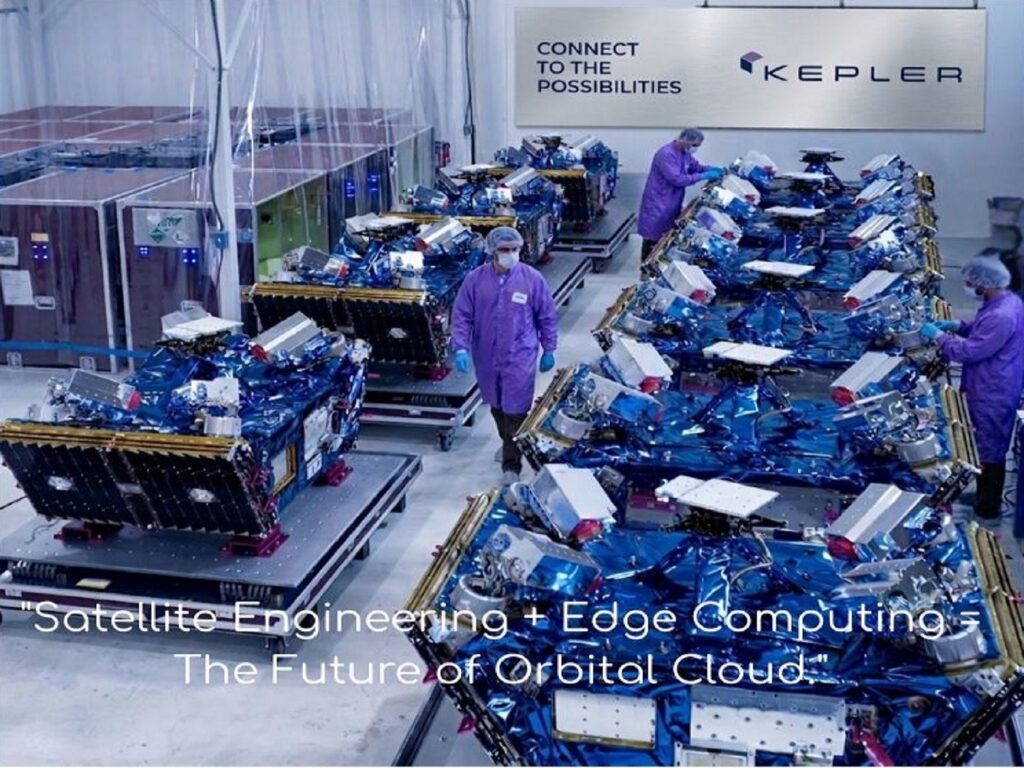
The hype surrounding data centers in space has now moved from science fiction to scalable reality. The industry has talked about off-planet servers for years, but the truth is that hardware density in space—especially GPUs—has always been very low. But now we are seeing a major shift in the near-term business of orbital computing. By 2026, the blueprint for space-based data processing is no longer just a concept; it has become an active market where the first large infrastructure is officially “open for business.”
The largest compute cluster ever orbiting our planet has been launched by Canada’s Kepler Communications. It’s not just a satellite with a fancy processor; it’s a networked powerhouse. With approximately 40 Nvidia Orin edge processors and 10 operational satellites, this system represents the current pinnacle of orbital computing. These units are connected via high-speed laser communication links, creating a distributed computing fabric. This means data can be processed without touching any terrestrial fiber optic cables. This breakthrough in orbital computing architecture is setting a new stage for space-based commerce.
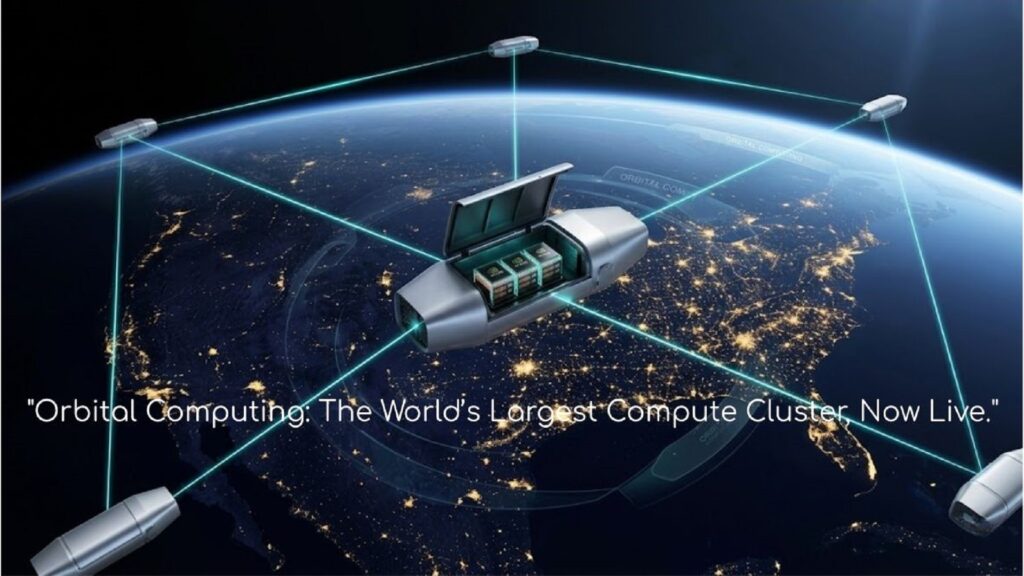
Kepler Cluster Breakdown: Powering the Future of Orbital Computing as a Service (OCaaS)
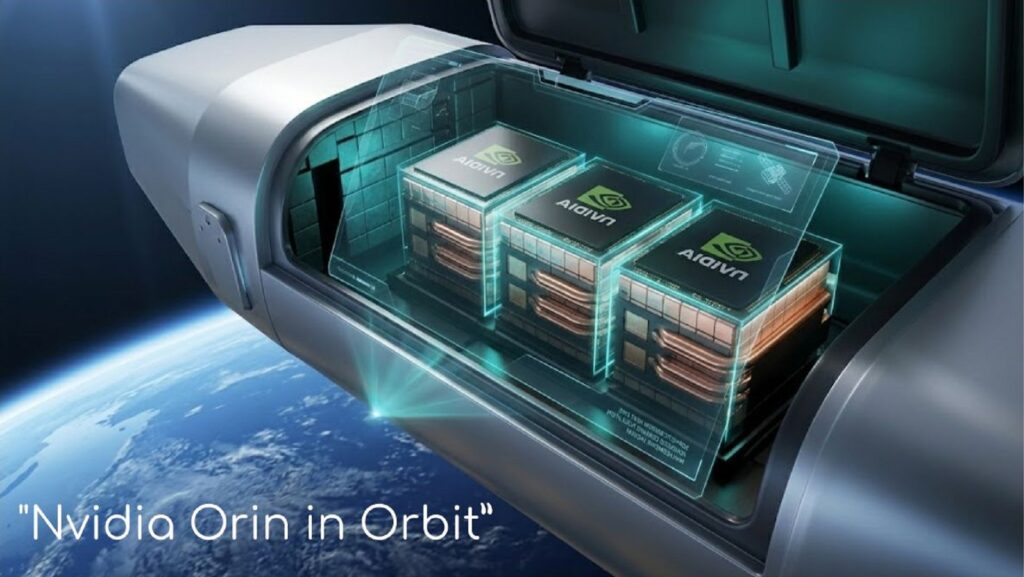
Understanding hardware is crucial for the USA’s tech-savvy audience. The Nvidia Orin modules being used here are high-performance “edge” processors. On land, you see them in autonomous vehicles or advanced robotics, but in space, they serve as the brains for real-time data analysis.
| Feature | Details |
| Total Satellites | 10 Operational Nodes |
| GPU Hardware | ~40 Nvidia Orin Edge Processors |
| Inter-Link Tech | Optical Laser Communications (Inter-satellite) |
| Current Clients | 18 Active Customers (Sophia Space included) |
| Primary Focus | Distributed Inference & Data Relay |
This setup is a bit different from the vision of SpaceX or Blue Origin. While those giants are aiming for large centralized data centers by the 2030s, Kepler is focusing on a “distributed” model. It’s about orbital computing as a service—providing a network and compute layer for other satellites, drones, and high-altitude aircraft.
Beyond AWS & Azure: How is Kepler’s orbital cluster becoming the new standard for space-based commerce?
The announcement that Sophia Space has become their 18th customer is a watershed moment for the industry. Sophia Space is a startup that tests software for “unique orbital computers.” By using Kepler’s constellation, they are essentially renting “space-time” on a GPU cluster to validate their code.
It’s much like the early days of AWS or Azure. Now, a company doesn’t need to spend millions to launch its hardware; they can simply connect to an existing orbital computing network. This has greatly lowered the “barrier to entry” for space-based AI and sensor optimization.
Data downlink hassles are over—get decisions in milliseconds with orbital computing!
Why don’t we bring the data processing down to Earth? It’s simple—the burden of bandwidth. Today’s modern SAR satellites generate so much data that downlinking them is a nightmare.
Zero Lag: No more waiting for minutes, action in milliseconds.
Smart Data: Forget the hassle of sending a massive 5GB image; orbital clusters only send a useful ’10KB alert.’
Deep Space Security: When the processing is happening outside the planet, it’s impossible for hackers to find an entry point.
Expert Analysis: Orbital Computing’s Next Phase and CEO Meena Mitri’s Vision
Industry experts believe we’re currently in the “infrastructure phase” of orbital computing. Warehouse-sized data centers are still a few years away. By 2027-2029, the focus will be on sensor augmentation.
“Kepler doesn’t consider itself a data center company, but rather an infrastructure for space applications,” says CEO Mina Mitry.
This distinction is crucial. It’s about creating a “compute layer” that will sit between space and our atmosphere. This layer will provide connectivity to drones and aircraft that traditional satellites often hinder.
Beyond Cooling: How are Nvidia chips protected from radiation in orbital computing?
Using GPUs in space is a “clandestine” operation, contrary to physics. Without air, traditional cooling fails. Kepler’s satellites use advanced thermal conduction to allow the heat of Nvidia chips to reach the satellite’s exterior. Furthermore, these chips have to be “radiation-hardened” so that cosmic rays don’t crash the orbital computing network.
Laser communication links are like “secret sauce” in this. Radio waves are slow and prone to interference. With the help of lasers, 10 satellites behave like a single computer. If Satellite A is busy, it transfers its task to Satellite B, making the orbital computing process completely seamless and flexible.
Business Implications for USA Tech Firms
For American tech firms, the “Open for Business” sign on Kepler’s cluster is an invitation. We’re now seeing the creation of “space-native” applications—apps written, compiled, and executed on orbit.
Eye in the Sky (Defense): Uninterrupted real-time digital surveillance of every enemy move.
Earth’s Safety Guard (Climate): Send instant alerts of every sign of global warming and temperature change.
The Orbital Traffic Controller (Logistics): A space-based brain that simultaneously manages thousands of drones and automated ships.
The economic impact is staggering. As launch costs fall, the cost of a “compute hour” in space is now beginning to compete with terrestrial edge cases.
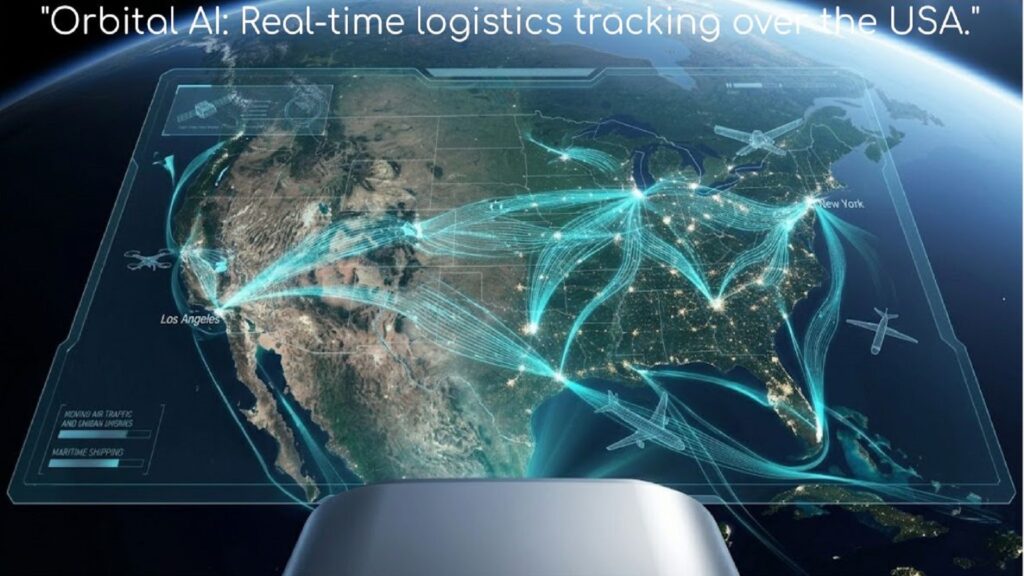
Sky Is No Longer the Limit
The largest orbital computing cluster ever launched by Kepler Communications proves that the infrastructure for the “Space Internet” is maturing. We have moved beyond the era where satellites merely reflected signals. We are now in the era of smart satellites that think and analyze.As companies like Sophia Space join the fray, the orbital computing ecosystem will become even denser. The massive “Giga-factories” of the 2030s await us, but today’s reality of 40 GPUs and 10 satellites is enough to start a revolution. The business of space is no longer just about getting there—it’s about what you can compute once you get there.
“The message for modern enterprise is clear: the largest orbital compute cluster is open for business, and the future of orbital computing is officially online.”
DISCLAIMER: This post is for educational purposes only and should not be construed as financial or investment advice. Always verify any hardware or software decisions with authoritative sources. Our aim is to keep you updated on the future of technology, but final decisions are your responsibility.
