


For years, Artificial Intelligence was just a “digital brain” confined behind a screen, with no direct connection to our real world. It simply wrote emails or suggested movies. But 2026 brings a big change. Now AI is not just limited to “information”; this is the era of AI into the physical world, where technology is now directly interacting with the things around us.
The biggest breakthrough of 2026 in Computer Science Engineering (CSE) is not a new chatbot, but the moment when AI gets “hands and wheels” to move in the real world. Crossing the boundaries of the browser, AI has now entered our real-life operations. Be it robots arranging racks in a Target store or Texas’ smart power grid—now the code is directly touching concrete. In short, this step of AI into the physical world is transforming our entire lifestyle.

The “World Model” Revolution: AI Now Understands the Real World
The Dawn of the “World Model”: AI Decodes Reality How did all this change so quickly? Until 2025, AI was simply a master at guessing the next word. But the AI of 2026 now anticipates the next “real-world action.” This technology is called World Models. Earlier robots were static, but today’s “Physical AI” recognizes the effects of gravity and friction. For example,Imagine a delivery robot sees water on a NY street; the AI will not only detect it as a ‘blue color’, but will also recognize it as a ‘Potential Danger’ or ‘Risky Zone’.
Now it’s in the implementation phase, where it’s fully prepared to handle the real-time challenges of physical reality.
The Simple Meaning of “AI in the Physical World”
“AI coming into the physical world means that it no longer just analyzes numbers and data, but also takes action in real-life situations.”
AI systems now:
-Interact with real environments
-Use sensors and cameras
-Make decisions without human intervention
-Learn from their experiences
“CSE 2026 highlights this transformation—AI that is moving beyond the screen and into the real world”.
How does AI understand the physical world?
AI’s autonomy in the physical world depends not just on algorithms, but on an integrated system. AI relies on sensors and data streams to perceive the physical world. In simple terms, AI is effective when it receives input, processes it, and executes it in the physical world through hardware. This synergy makes it a physical entity.
-Sensing (touchpoint of reality): Sensors provide us with not just data, but live experience of the real world, Without LiDAR or cameras, AI is blind. These ‘body parts’ allow it to experience the physical world not just as data, but as a real place—where it knows how far away or how hard something is.
-Physics-Engine Integration: It’s not enough for AI to simply process raw data. It must calculate fundamental principles of the physical world, such as momentum and resistance. Using “World Models,” AI simulates the impact its actions will have on the physical world
-Actuation (Taking Action): Ultimately, mechanical power comes into play. With the help of robotics and smart engines, AI takes physical actions into the physical world—whether it’s delicate surgery or moving a heavy object.
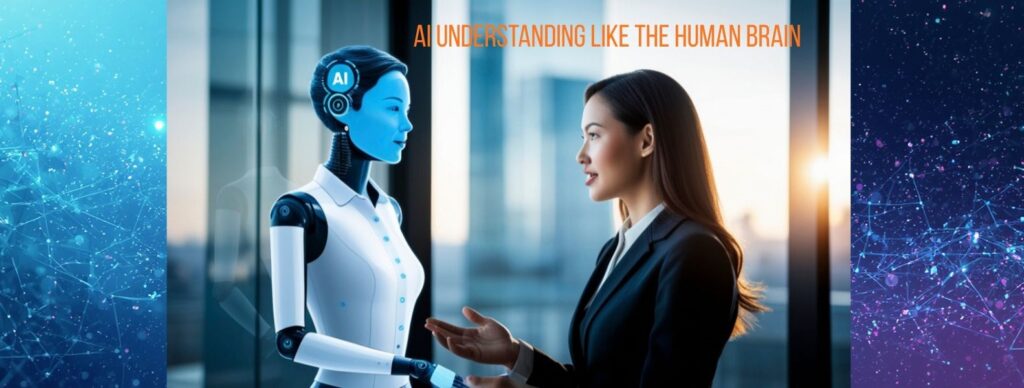
Ground level Impact in the USA
-The transition of AI into the physical world is most visible in three major American sectors:
| Sector | Physical AI Application | Ground level Impact |
| Healthcare | “The Wonders of Modern Healthcare: Robotic Surgery and Advanced Bionic Limbs” | Faster patient recovery times and significantly improved mobility for people with disabilities. |
| Logistics | Autonomous “Agent AI” fleets within Amazon and FedEx warehouses. | 10-15% increase in delivery speeds as bots autonomously optimize their own navigation routes. |
| Energy | Smart power grids integrated with physical weather modeling. | Drastic reduction in summer “brownouts” (power outages) through predictive load management. |
1. Healthcare: Healing AI
In the USA healthcare system, 2026 is the year of “Surgical Copilots.” These aren’t just remote-controlled machines. They’re AI that can “feel” the pressure of human tissue. When working in the physical world, these robots adjust needle pressure faster than a human surgeon. Furthermore, wearable sensors no longer just count steps but also predict physical conditions like heart attacks hours in advance, creating your body’s “Internal Twin.”
2. Silicon Coworkers: The Rise of Humanoid Robots
If you visit a factory in Michigan or South Carolina today, the landscape has changed. Humanoid robots, which previously only looked good in YouTube videos, are now doing real work. They’re lifting boxes, sorting parts, and safely moving between people without colliding.
These robots are not replacing humans, but are helping us with the ‘3 categories’ (boring, dirty, and dangerous) of tasks.”
3. Smart Cities: Eye and Human, Same Playground
Our cities are now transforming so that AI can survive in them. “Machine-Legible” infrastructure is being built by 2026. This means traffic lights that talk to cars and zones where drones can safely land.We are giving our physical world a ‘digital upgrade’ so that by the time the planet arrives, it has an accurate map.”
What does 2026 tell us about the future?
CSE 2026 sends us a very clear and powerful message—AI is no longer just a game of digital data; the fusion of AI and the physical world has become completely unstoppable. This new era tells us that technology has moved from the screens in our hands to our real world.
What this means for the USA and the global tech landscape is:
–Global Tech Leadership: In the future, the country that controls both software and the robotics and hardware that operate in the physical world will be at the forefront. The USA is taking this leadership to new heights.
–New Roles and Skillsets of the Age: Old jobs aren’t going away, they’re changing. The future tells us that there will be increasing demand for roles that can deploy, manage, and repair AI in physical environments.
-Safe and Smart Daily Life: Proactive Protection:Our everyday lives are about to shift from “reactive” (taking action after an accident) to “proactive” (preventing an accident). When AI scans for even the smallest changes in the physical world, it will prevent hazards like road accidents, gas leaks, or factory fires before they even occur. The biggest advantage of this is that human lives in the physical world will be much safer than before, because technology can now “see” and “smell” danger.
Human AI Colloboration:The biggest message is that AI is not humans’ enemy, but rather their greatest “ally.” AI will not replace us, but will exponentially enhance our capabilities in the physical world. We can view this partnership in three ways:
-The Shield: AI will take over tasks that are highly dangerous to human life, such as deep-sea mining or radioactive waste handling. In these deadly situations in the physical world, AI will act as a shield.
-The Support System : Whether it’s space exploration or the depths of the ocean, where the limits of the human body end, AI support kicks in. This will make research and work in the physical world possible even under difficult conditions.
-The Efficiency Expert : AI will take over tasks that are too tiring or “boring.” This will give humans more time to do creative and strategic work, while AI will flawlessly execute routine tasks in the physical world.
TAKEAWAY:
The most important thing is that AI has come not to replace us, but to become our “partner.” All the tasks of the physical world that are exhausting, dangerous, or downright boring will now be taken over by AI. This will give us humans the opportunity to focus more on our creativity, innovative thinking, and decision-making.
For the USA, this new era signals global leadership and a new kind of skill-based jobs. The future doesn’t mean “dreaded robots,” but a strong partnership between smart machines and humans.
