

Technology is changing the face of healthcare. A new AI study from Harvard makes it clear that old methods of medical diagnosis are about to change forever. When we talk about the future of medical science, this Harvard AI study serves as a guide. It shows how machine learning models like OpenAI’s O1 are now making more accurate decisions than human doctors in emergency rooms (ER). This Harvard AI study makes it clear that we are now in a time where human expertise is about to be combined with the speed and precision of AI.
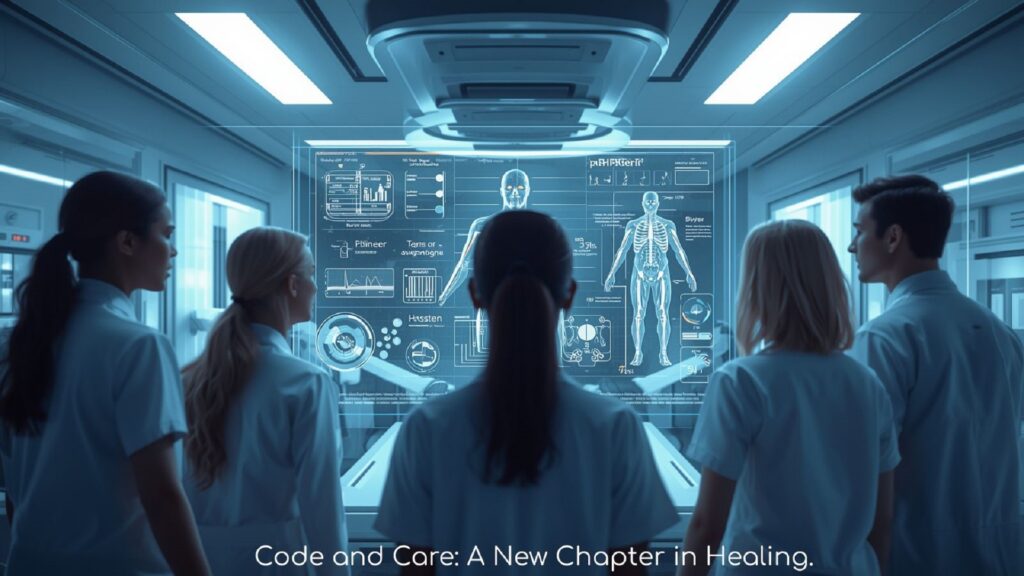
The Solution to Human Fatigue: Will AI Become Emergency Medicine’s Biggest Support?
Emergency rooms in US hospitals are considered the ‘front line’ of medicine, where life-and-death decisions have to be made within seconds. This is a high-pressure environment where constant noise, rush, and workload are natural, leading to doctor burnout. In the past, the accuracy of diagnosis depended entirely on the doctor’s training and alertness. However, a recent AI study from Harvard has challenged this old paradigm. The core objective of this research was to analyze whether AI algorithms—which are free from human fatigue and stress—can minimize diagnostic errors.
Analysis of Results: What Did the Harvard AI Study Show?
Experts from Harvard Medical School and Beth Israel Deaconess Medical Center carefully designed this study. They used real-life cases of 76 patients with complex and difficult symptoms.
In this Harvard AI study, the AI’s results were compared with those of two experienced doctors. The results were truly astonishing. Initially, the AI gave the correct diagnosis in approximately 67% of cases, while the accuracy of human doctors ranged between 50% and 55%.
As more reports and patient data were fed in, the AI’s accuracy increased to 82%, and doctors hovered around 70-79%. This Harvard AI study shows a significant change: where humans can make mistakes, AI acts like a completely objective and tireless machine.
AI’s ‘Superhuman’ Precision: Why Did a Harvard Study Surprise Doctors?
If you want to understand the reason for the success of the Harvard AI Study, you need to consider the vast amount of data AI has at its disposal. AI has analyzed thousands of times more medical literature and millions of case studies than a doctor has read in their lifetime.
Elimination of Cognitive Bias: Doctors often focus on a single disease based on initial reports (called ‘anchoring bias’). The Harvard AI Study shows that AI doesn’t do this; it gives equal importance to every detail.
Multimodal Synthesis: Connecting labs, past history, and current symptoms is a plus point for AI. According to a Harvard AI study, AI connects the dots that busy doctors often miss.
Real-time Decision Support: Time is everything in the US healthcare market. AI’s efficiency can reduce patient waiting time and diagnostic uncertainty in the hospital.
Stethoscope or algorithm? Because AI is not a replacement for a doctor, it is a ‘power-up’.
While the results of the Harvard AI study are undeniably impressive, they must be interpreted through a balanced lens. The objective of AI is not to displace physicians but to empower them with ‘augmented intelligence.’ Beyond the technical act of diagnosis, the role of a doctor encompasses providing care and emotional support to patients and their families. Instead, AI serves as an indefatigable, ‘super-smart consultant’ that enhances clinical decision-making.
The Way Forward for American Healthcare
The path forward for US healthcare is pointing toward a major transformation. A Harvard AI study has made it clear that using AI can reduce doctors’ cognitive burden. The benefit will be that doctors will be able to focus directly on patient care, rather than focusing on technology. Challenges—such as data security and regulations—are certainly present, but if we can smartly integrate AI into clinical workflows, a new era for the healthcare system will begin.
Technology: A Blessing, Not a Threat—The Real Message of the Harvard AI Study.
The Harvard AI study has given the medical community a wake-up call. The question now is not “if” AI will transform healthcare, but “how” we will integrate it effectively. We are moving toward a future where human expertise and AI-driven speed work in tandem.
As the coming years pass, the impact of the Harvard AI study will be visible in medical school education and hospital technology setups. Technology is not a threat to medicine, but a new uplift. If the results of this Harvard AI study save even a few patients’ lives or speed up treatment, then this journey of technology will be a blessing for all of us.
DISCLAIMER:The information, analysis, and insights shared on this blog, including discussions regarding the Harvard AI Study and emerging technological trends, are provided for educational and informational purposes only. While every effort is made to ensure the accuracy of the data and content presented, technology, AI algorithms, and market landscapes are constantly evolving.
