


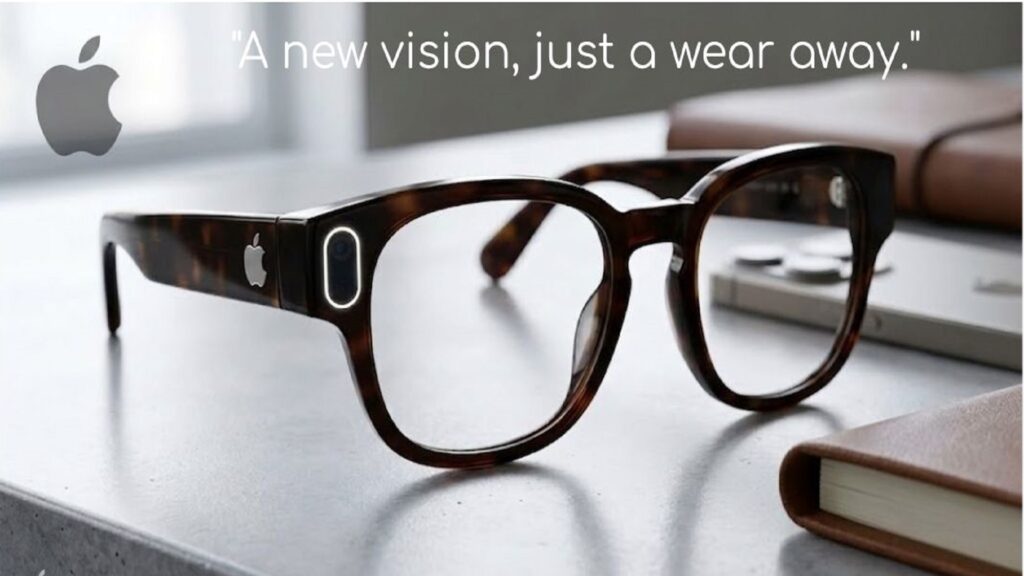
Friends, there’s big news in the tech world—Apple smartglasses designs are now officially in the prototype phase, setting off a new storm in the wearables market. According to a recent report by Bloomberg’s Mark Gurman, Apple is currently testing at least four different Apple smartglasses designs to find the perfect balance of high-end fashion and cutting-edge utility. This shows that Apple is now focusing more on looks and style so that its smartglasses look good on all face types and preferences. By experimenting with different designs, Apple wants to create glasses that look great and that people can wear them daily without any hesitation.
Different from competitors: Why will Apple Smart Glasses have multiple styles?
Apple has always been a design-driven company, and it doesn’t want to take any risks with “Project N50” smart glasses. Unlike other competitors that often launch “one-size-fits-all” frames, Apple is looking at the eyewear market through the lens of the Apple Watch—enough variety to appeal to the mass market.
Retro look or Tim Cook style? Check out 4 unique incarnations of Apple Glasses
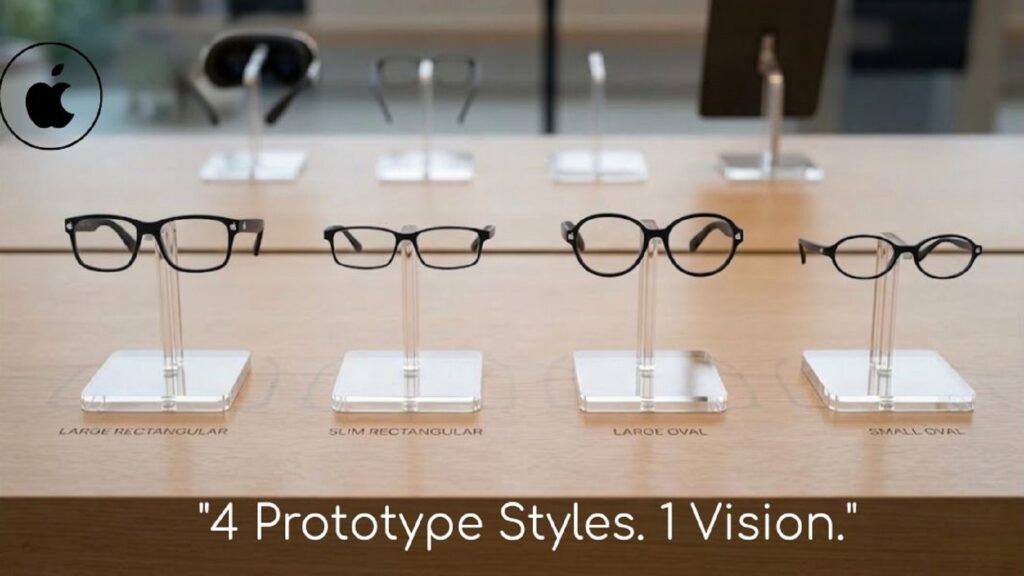
Apple smart glasses designs currently in the testing phase include:
The Large Rectangular: A bold “Wayfarer” style that offers a trendy and classic look.
The Slim Rectangular: A minimalist design that reportedly resembles Tim Cook’s own glasses.
The Large Oval/Circular: For those who prefer a slightly retro or academic aesthetic.
The Small Oval/Circular: A refined and subtle option that will suit smaller face profiles.
Fragile and stylish: What’s the role of the ‘acetate’ frame in Apple Glasses?
The biggest highlight of these leaked Apple smartglasses designs is their material choice—Acetate. While most smartglasses on the market use cheap and fragile plastic, Apple has taken a ‘premium approach’. Acetate is not only more durable (stronger) than plastic, but it also has a natural sheen and luxury texture that gives the glasses a high-end look. The biggest advantage of this material is that it is hypoallergenic (doesn’t irritate the skin) and doesn’t have that cheap ‘plasticky’ feel, which perfectly suits Apple’s premium image.
Apple Smart Glasses Design vs. Meta Ray-Ban: Who Will Win the Battle for the Future?
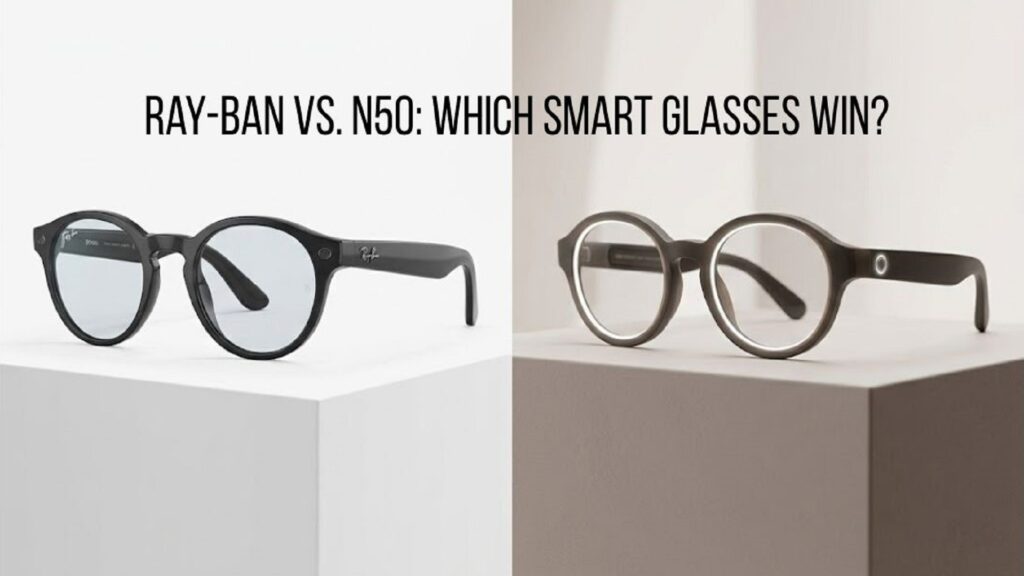
These Apple smartglasses designs are meant to compete directly with Meta’s Ray-Ban glasses, but with some “Apple-esque” twists. The biggest difference is in the camera layout. Meta uses circular lenses, while Apple is testing vertically oriented oval lenses and integrated ring lights to create a unique “iconic” look.
Comparison Table: Smart Glasses Face-Off
| Feature | Meta Ray-Ban (Gen 2) | Apple Smart Glasses (N50) |
| Primary Material | High-grade Plastic | Premium Acetate |
| Design Variety | 2 Main Styles | 4 Prototype Designs |
| Camera Design | Circular / Integrated | Vertical Oval with Ring Lights |
| AI Integration | Meta AI | Apple Intelligence (Siri + iOS 27) |
| Display | None (Audio-only) | None (Screenless Strategy) |
| Ecosystem | Meta Horizon | Deep iPhone/iCloud Integration |
Screenless Strategy: Why Does Apple Smart Glasses Design Focus on Comfort Over Display?
You might be wondering why these Apple smartglasses designs don’t include a futuristic heads-up display. In fact, this is a well-thought-out “Plan B” strategy. After the Vision Pro, Apple realized that users needed lightweight and socially acceptable devices.
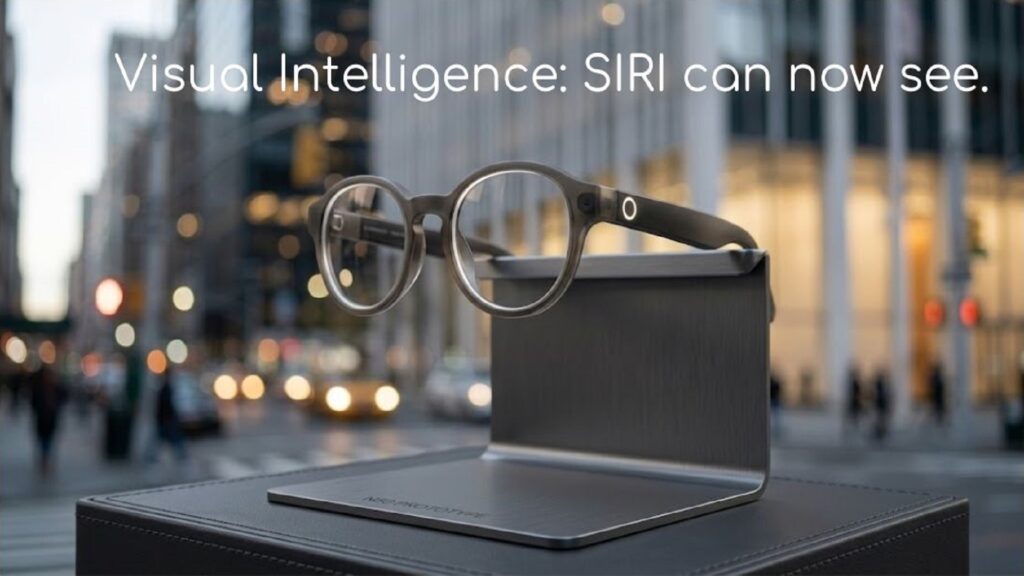
Removing the screen keeps Apple smartglasses designs slim and comfortable. Instead of digital overlays, you’ll interact with the world through visual intelligence. Glasses will “see” what you’re looking at, allowing Siri to identify monuments or translate menus in real-time—all with high-quality audio.
Siri’s New Eyes: A Powerful Combination of Apple Smartglasses Design and Apple Intelligence
The real strength of these Apple smartglasses designs is their connection with iOS 27. Apple is building not just a camera, but a sensor for Apple Intelligence.
Contextual Awareness: Glasses’ “eyes” will allow Siri to provide unprecedented oversight of your daily tasks. If you’re looking at a broken sink, Siri will automatically play a repair video on your iPhone.
The “Icon” Factor: Apple wants these frames to be instantly recognizable, like AirPods. Whether it’s the acetate shine or the unique oval camera, these Apple smartglasses designs are set to become a status symbol.
Mission 2027: USA Launch and Global Impact of Apple Smart Glasses Designs
These glasses are a robust evolution of “Everyday Carry” for American consumers. Whether running in New York or hiking in the Rockies, these Apple smartglasses designs will replace both your AirPods and sunglasses.
Launch Timeline
The journey begins in late 2026 when the first glimpse of these smart glasses will be shown with the iPhone 18. After this, in early 2027, people will be able to book their favorite designs through pre-orders. And finally, by mid-2027, these glasses will have become the pride of every Apple Store in the USA.
Not a gadget, a revolution: How will Apple Smart Glasses design change our digital world?
The leak of these four Apple smartglasses designs is proof that Apple has left the era of ‘bulky headsets’ behind. By focusing on Apple smartglasses designs that look like real glasses, the company is eliminating all the barriers that prevented people from wearing wearable technology. While the final product is awaited, it’s clear that these Apple smartglasses designs are not just a gadget, but a revolutionary way to connect with the digital world, combining luxury assets and Apple intelligence, and are poised to become the next great ‘status symbol’.
DISCLAIMER: The information shared in this article regarding “Apple smart glasses designs” and “Project N50” is based on current leaks, industry rumors, and analytical reports. As Apple has not officially announced these products yet, the final designs, features, and launch timelines may change. This content is for informational purposes only.
